
Translation of the original Spanish article.
By Therese Jamaa, Vice President of Strategic Alliances at Openchip
Barcelona, September 8, 2026.- Every September 8, International Literacy Day reminds us that learning to read and write has been one of humanity’s greatest achievements in advancing progress and freedom. Yet in a world shaped by technological disruption, the definition of literacy is no longer static. As UNESCO points out, literacy is a fundamental human right whose boundaries must now expand to encompass digital and technological skills if we are to build fairer and more knowledgeable societies.
Understanding technology, science and artificial intelligence is the new literacy. It is no longer simply a matter of using new tools as end users; we must ensure that everyone has the knowledge, curiosity and confidence they need to play an active role in shaping the world to come.
The history of science and innovation shows that the capacity for logical and analytical thinking has always existed, even in places where formal education was not readily accessible. Brilliant minds with an innate aptitude for logic, problem-solving and technical creativity can be found everywhere; sometimes, all they need is an opportunity to flourish. The ability to observe, connect ideas and prototype solutions does not always originate in a university classroom; it often springs from intuition and necessity. Talent is everywhere; opportunity, however, remains unevenly distributed.
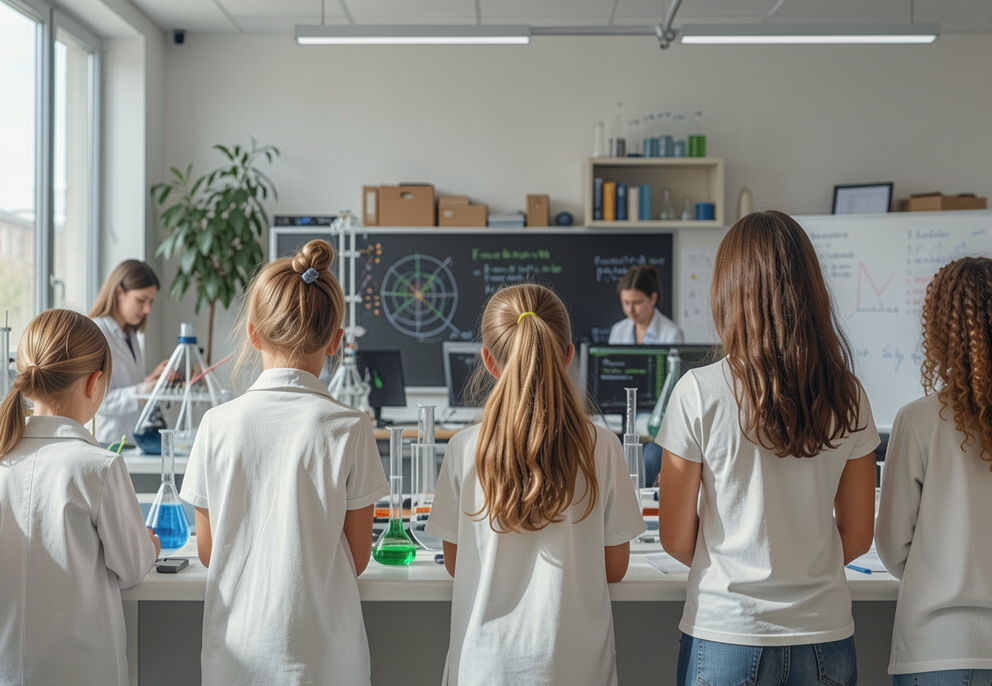
This gap is particularly evident when we consider girls’ and young women’s access to STEM disciplines—science, technology, engineering and mathematics. Across different regions of the world, when schools are connected with the technology ecosystem, when tools are made available and, above all, when young people are exposed to real-life role models, the picture changes. What changes is not these young women’s ability, which was there all along, but their perception of what they can achieve.
Global initiatives such as Girls in ICT, programs designed to foster interest in science, and youth hackathons are more than educational activities: they are gateways to the future. It is not enough to convey the abstract message that a girl can become an engineer, scientist, or technology designer; we need to give her an environment in which she can discover that possibility for herself and the confidence to pursue it.
Europe is at a decisive moment. Its strategic commitment to semiconductors, microchips and artificial intelligence aims to strengthen the continent’s leadership and technological autonomy. But the success of this transformation will not depend solely on the algorithms we develop or the infrastructure we build. Above all, it will depend on our ability to identify, develop and integrate the diverse talent that remains hidden or underutilized today.
Those of us working in the technology sector share a responsibility: not only to innovate and develop advanced solutions, but also to serve as role models, break down barriers to entry and instill confidence in younger generations. Technical education provides the tools, but self-belief is the catalyst that enables people to push beyond perceived limits and take on complex challenges.
21st century literacy means turning knowledge into autonomy, innate talent into genuine opportunity and curiosity into shared progress. The ultimate goal is for anyone, regardless of their background or gender, to look toward the technological horizon and say: “I can understand it, too. I can create it, too. I belong here, too.”
The next great innovation to transform our society may already be taking shape today in the mind of a young girl who simply needs a role model to look up to, an environment in which to learn and a confident voice telling her that the future belongs to her, too. Because technological progress does not happen by chance: it is built on confidence.